Section 1: Describe the impact of the resource use as presented in your reading.
- In this article, ecologist in New Zealand were talking about how they could use the gene editing technology to help eliminate invasive rodents by the year 2050. The rodents in New Zealand that were brought on by humans have become a huge threat to the native birds of the land. These scientist would use a technique called CRISPER. This technique allows scientist to edit genes of animals easily allowing the population to slowly decline humanely.
- The main environmental impacts of these techniques would be the population change. As the population of these rodents decreases, the bird population would increase. The other main impact that would take place if this predator free act happened would be the change across the globe. It would be very hard to just contain this gene change in just New Zealand. It would most likely change the entire worlds population and affect other species as well.
- The main affect this act would have on humans would be the amount of funding needed. This act as of now, doesn't seem to have any primary health affects against the human race. Some possibilities that are unsure could be the population change across the globe. This could possibly affect humans diets if this affects other species besides the rodents.
 |
| A photo of the common brown rat in New Zealand |
(Source found in Professors on words in her Thursday September 7th slide)
- Something that this information reminds me of is the environmental legacies. Both the birds and the rats could be defined as an environmental legacies. An environmental legacy is anything that leaves some kind of effects on the environment from actions in the past. The rats could be an example of an environmental legacies because they decreased the bird population. The birds are an example of an environmental legacies because the are known to New Zealand as a huge part of there society and have become extinct over the years. Both of the species will remind environmental legacies because they are in the process of getting both of the population under controlled. If the rodent population becomes extinct, the bird population will start to increase and hopefully many of these species will be able to become not endangered anymore. If they are not able to get the rodent population under control, the birds will likely become extinct and many more species will become endangered. In class we learned that nothing ever permanently goes away, it all has to go somewhere. That is why no matter what happens to either of these populations, there impact will remain part of our planet forever.
 |
| A Photo of One of New Zealands Endangered North-Islands Kaka |
- A way us students at Keene could have a better understanding of this problem is being aware. If we had more information we have on the positives and negative effects of the CRISPER solution, we could decide if we think its worth the changes it could do to the United States and the different species population. As of now, we don't know all the possible affects it could have on human health and environmental health since there has been no small test cycles yet. As of right now, there is not much we can do to change the environmental impacts and human health impacts since the act is not in process just yet. If this act does become passed, we will know the possible health effects and environmental effects from this act. Once we know this information, we can figure out how it will affect different animal species in America and see if it is worth the risks.
 |
| Keene State College |
LAST STEP: After completing any optional additions you might choose (described below), remember to take the “quiz” on canvas for this assignment to certify that you completed this assignment and to enter your optional points, if applicable.
- Option 1 and 2
- I don't think that this gene editing technology is a good idea at all. Unfortunately, the bird population is rapidly declining because of these rodents. However, I believe there is many other ways we could save these birds instead of possibly altering all of the species in the entire world. The article states "In theory, gene drives spread so quickly and relentlessly that they could rewrite an entire wild population, and once released, they would be hard to contain. If the concept of modifying the genes of organisms is already distasteful to some, gene drives magnify that distaste across national, continental, and perhaps even global scales". This could become dangerous to other endangered species and could affect the entire world. For example, in the United States, Rats are an essential part to other countries, even if they aren't in New Zealand. Rodents are a common part to bats and owls diets along with insects. If we didn't have rats anymore, the bat and owl population would decline and the insect population would increase making us over populated with bugs! Instead of trying to permantley extinct one species, we could do other things to try and save the species that are left by using other methods that have worked for other endangered species. That previous source includes 12 other ways that could help endangered species.
- Even though rats might not be helpful to New Zealand, they are helpful to other parts of the world. The CRISPER article tells us that rats can be sacred in other parts of the world due to cultural beliefs. The CRISPER technique would likely affect the entire globe. Not only are rodents sacred in some cultures, they are helpful in other parts of the world. In America, the kangaroo rats are known to help spread tree growth by spreading seeds. This is a vital part in sustaining are ecosystems in the United States and other parts of the world.
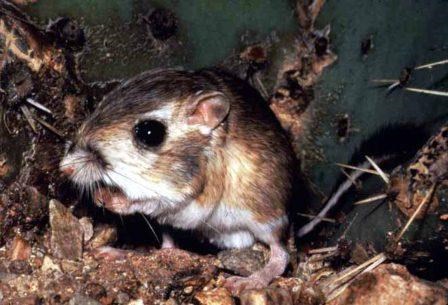 |
| Kangaroo Rat Spreading Seeds |


This comment has been removed by the author.
ReplyDelete